... where you will have the opportunity to get to know the day-to-day life of university and your fellow students on your course at the Faculty of Economics and Law in small group sessions, even before lectures begin.
Please note!
The SIC programme takes place before the official start of lectures.
You can find an overview of the events you can expect in the timetable available for download. You will usually receive a welcome email from the SIC team about a week before the start.


Getting started with your Studies
An unusual start to your studies...
... which you will experience as a newcomer to the Business School in the first two weeks of your studies at Pforzheim University: the SIC program.
The SIC program focuses on the promotion of social, methodological and intercultural skills, also known as key qualifications or future skills. Our aim is to optimally prepare students for the complex, multi-layered demands of their studies and the future world of work. This is why the teaching of interdisciplinary qualifications for the professional degrees at our university is of great importance.
We, the SIC team, the professors and tutors, wish you a good start at our university, many new insights, exciting learning experiences and - last but not least - lots of fun with these interactive and creative forms of learning.

The SIC programme is a obligatory course
The SIC introductory weeks include initial lectures and information events that are important for your studies and support you at the start of your degree program, e.g:
- Welcome by the Dean of the Business School
- VIA impulses
- Introduction to the SIC program and information on the English test
- Introduction to the university's IT
- Climate protection and sustainability
- ‘Innovation, entrepreneurship & personality - together we make ideas fly’
- Corporate responsibility for sustainability (incl. a voluntary exam for the ETHIKUM)
- Introduction to the study and examination regulations
- Learning techniques
- Information on quantitative methods Accounting Compulsory credits - English courses
- Hands on AI: From Basics to Application in Your Studies
- etc.
Some of these are continued in the course of the semester through lectures and e-learning courses.
Comprehensive information on the SIC Program can be found
- on this SIC website
- in the e-Campus (for students, university login required)
- at the start of the program in the Moodle course “SIC Information for New Students in SS 2026”.
We will inform you of the group allocation by e-mail to your university address shortly before the start of the event.
We look forward to welcoming you to our university soon!
Before the first semester
You will mainly work in small groups with student tutors and get to know your fellow students at the same time. We want to familiarize you with ways of learning and working that will be useful and helpful to you in your further studies:
- “Get Ready 4 C” incl. Business administration case study
- Business simulation game
- Hands on AI: From Basics to Application in Your Studies
The content and references of these training courses will come up again and again in individual seminars during your studies. Social skills and teamwork are very important to us!
First semester students are automatically registered for the two courses mentioned above.
Before the second semester
In the third semester
Another component of the SIC program is the Cross Cultural Competencies (CCC) seminar. The CCC events take place in the 3rd semester (for students on the Taxation and Auditing program and the Controlling, Accounting and Finance Management program in the 2nd semester).
CCC is a compulsory course for all Bachelor's students at the Business School.
There is a separate CCC course for students of the following degree programs:
- International Business
- International Marketing
What is the CCC seminar?
The CCC seminar is held in English. Students are taught the basics of successful communication, co-operation and management between and across cultures - abroad, at home and virtually. Based on cultural dimensions from the GLOBE project, relative differences between cultures are considered and insights are gained that should help to build bridges between cultures and recognise opportunities in intercultural cooperation.
You can find the following information in the Cultural Competencies site
- Link to registration
- Schedule

Semester after semester, more and more new students are beginning their studies at Pforzheim University. In the winter semester,
around 550 new students, and in the summer semester around 200, begin their Bachelor’s degree in the Faculty of Business and Law as part of the SIC programme. Over the last 10 years, around 7,500 first-year students have taken part in the sessions, which are predominantly held in small groups of no more than 15 participants. To this end, around 40 student tutors are selected, trained and supervised each semester. For a winter semester cohort, around 200 small-group sessions for 550 participants must be synchronised and organised according to a rotation schedule.
For the individual sessions, around 30 group rooms are required simultaneously over several days, all of which must be equipped with a projector, flipchart and Metaplan board. Room booking, planning and coordination present a logistical challenge.
No sooner have all the tutors been assigned to the SIC programme than the first ones start pulling out because they have, after all, secured a part-time student job or an internship. At that point, we need to call up new tutors from the reserve list and integrate them into the existing schedule, or reactivate former tutors who have already taken part in the tutor training and can step in at short notice.
Group allocation, which also takes the new students’ degree programmes into account, can only be carried out shortly before the SIC programme begins, as the new students are still in the process of enrolling – or are already withdrawing because they’d prefer to study elsewhere after all. The first participants announce that they will not be able to be at the university in time for the programme to start because they still have an ongoing employment contract to fulfil. A mother rings to ask whether the SIC programme is compulsory for her son, who is currently still in Australia, and what he should do now. For the past 10 years, a similar scenario has been playing out time and again.
Welcome to the SIC Programme!
Development and components of the SIC Programme
Eleven years ago, as part of the Bologna Process, the SIC Programme was developed to promote social, methodological and intercultural competence, and was introduced at the start of the first Bachelor’s cohort in 2006. Professor Dr Günther Bergmann took the lead in its design and organisation – with organisational support from Rainer Gebhardt. The SIC programme has been continuously evaluated and improved since the 2006/07 winter semester and has been led by Brigitte Burkart, a qualified psychologist, since the 2009/10 winter semester. The SIC components (see Fig. 1, Building blocks of the SIC programme) include a business management simulation at the start of the degree programme, designed to introduce students from diverse educational backgrounds to business management decision-making processes. Furthermore, training sessions on ‘communication and teamwork’ are conducted by tutors in small groups. These sessions also include practical, game-based exercises, which are reviewed through group reflection, thereby creating learning experiences that can be drawn upon throughout the remainder of the degree programme. The content of these sessions is incorporated into a business administration case study, which the students work on in self-directed groups and present to the tutors during a tutorial session – roughly halfway through the first semester.
At the start of the second semester, a presentation training session – also led by student tutors – takes place. This is followed by further individual sessions on studying abroad, academic work and learning techniques. In the third semester, an intercultural training course – conducted predominantly in English – is on the programme. Mixed groups of German and international students experience and analyse interculturally relevant social situations together, for example through role-plays. In the periods between the three training modules, they work on business-related intercultural issues.

The basic concept of the SIC programme
The fundamental idea and the need to develop students’ social and methodological skills, alongside their subject-specific skills, throughout their degree programme were by no means new in 2006. Training sessions on social skills had long been offered in individual degree programmes; in the Human Resource Management programme, for example, training in presentation, communication and group dynamics had been available since the 1980s. With the introduction of the bachelor’s degree structure and the associated principle of employability leading to professional qualifications, it became necessary for the entire Faculty of Economics and Law to systematise this provision and make it compulsory. Since then, the SIC programme has been awarded credits (‘ungraded assessment’). Pforzheim University was one of the first higher education institutions in Germany to implement such a systematic programme. The development of social skills is – and this is undisputed – a core element of any (higher education) programme.
A high level of professional competence is a necessary prerequisite, but it is not the sole determining factor for personal effectiveness in a professional environment. Behavioural training programmes, familiar from corporate human resources development, serve as a model here, as social skills can neither be ‘taught’ nor can learning objectives be assessed. This is not primarily a cognitive process of acquiring knowledge, but rather a matter of behaviour. This model was implemented in Pforzheim in the form of communication training and teamwork training. Of course, this approach also has its limitations: a person is unlikely to change their behaviour in a lasting way after just two days of training. The situation is no different within a company. Nevertheless, the aim is to lay a foundation that can and should be drawn upon during further studies (and in one’s career).
A high level of professional competence is a necessary prerequisite, but it is not the sole determining factor for personal effectiveness in a professional environment. Behavioural training programmes, familiar from corporate human resources development, serve as a model here, as social skills can neither be ‘taught’ nor can learning objectives be assessed. This is not primarily a cognitive process of acquiring knowledge, but rather a matter of behaviour. This model was implemented in Pforzheim in the form of communication training and teamwork training. Of course, this approach also has its limitations: a person is unlikely to change their behaviour in a lasting way after just two days of training. The situation is no different within a company. Nevertheless, the aim is to lay a foundation that can and should be drawn upon during further studies (and in one’s career).
For beginners, presentation training constitutes methodological training that overlaps with behavioural training once the basic presentation techniques have been mastered. It focuses on observable, quantifiable aspects of one’s demeanour, such as manner of speaking, gestures, energy and eye contact, etc. It therefore makes sense for presentation behaviour to be assessed according to the same criteria in all subsequent presentations across all seminars, and for this to be included as a component mark in the module mark. Feedback based on the ‘Assessment of Presentation Behaviour’ criteria system (available on the intranet at https://businesspf.hs-pforzheim.de/SIC) is mandatory for every lecturer in whose course presentations take place.
Behaviour-oriented training means that every participant must have the opportunity to practise and receive feedback. In a training session (‘exercises’), this is only possible in small groups of no more than 15 participants. With regard to the tutors for such behaviour-oriented training sessions, there are essentially three options: (1) numerous full-time professors conduct these training sessions as part of their teaching load, (2) experienced external trainers are engaged on a contract basis, (3) student tutors take on this task and are trained for it.
Option 1 is not realistic, although it could certainly be enriching for some lecturers to do more than simply impart subject-specific knowledge. Option 2 is expensive; however, there are some universities that have gone down this route. Option 3 seemed appropriate and realistic for our situation in Pforzheim (currently 550 first-year students in one winter semester).
Of course, this too is a compromise between the ideal and what is feasible; it is clear that the quality of the training depends on the quality of the tutors.
In addition to the components of social and methodological skills, the SIC programme pursues another objective in the first semester during the introductory weeks: the social integration of students, who are often very young these days. At the juncture between two stages of life – school or vocational training, leaving the family home, and the (partial) loss of the social circle of friends on the one hand, and studying in what is initially an unfamiliar environment with unfamiliar people and structures on the other – there arises a strong need for guidance and for new social networks.
Based on the experiences of us older students at universities and colleges, this aspect has been largely ignored. It has been left to students’ private lives and self-organisation, which has not been a problem for some, but has also led to considerable inefficiencies and a lack of effectiveness in the first semesters of study for others (cf. prolonged study periods).
The SIC programme aims to contribute to the social integration of first-year students. Their initial experiences of university life should not consist solely of large-group sessions on challenging business administration topics, but should also include the opportunity to work together in small groups to achieve initial goals and get to know one another. Student tutors are invaluable when it comes to ‘acculturation’ at university.
At the start of their studies, they provide an authentic and credible insight into what is important and offer guidance.
Seen in this light, employing student tutors as trainers is not a substandard compromise, but rather the method of choice (even if things do not always go perfectly in one case or another).
Internationalisation is a key mission of Pforzheim University. The component of intercultural competence was incorporated as early as the development of the SIC programme. The underlying principle here, too, was to move away from purely seminar-based teaching; the focus was on the idea of learning from one another in small groups. It was only natural to involve the numerous international students in the programme design, thereby shaping intercultural collaboration not merely as a topic but as a practical experience.
The basic idea was and remains sound – but putting it into practice remains difficult and prone to setbacks. If, for example, there is only one – or even no – international student in a small group, then the concept is questionable. It would be useful to be able to draw on the international experiences of German students as well.
Integration of SIC components into the degree programme
A fundamental and critical debate has arisen regarding the development of social and methodological skills. This critical debate is also reflected in considerations regarding staff development within companies. Does it make sense to offer additional seminars on communication or leadership (off-the-job training) or to implement measures integrated into professional practice (on-the-job training)? At first glance, the answer is simple: of course, integrated measures make more sense, as they are associated with a higher likelihood of transfer. Examples might include elements of in-company staff development such as coaching, peer counselling, action learning designs in projects, etc. If we look at higher education, a difference becomes clear: the majority of students do not have ‘professional practice’ experience. It is only during or after the work placement semester and in project-based seminars that such experience-based learning processes are possible (and are methodically implemented in many degree programmes). At first glance, the SIC programme appears to be a supplementary offering, as it constitutes a standalone module within the Bachelor’s curriculum. However, the core idea behind the SIC concept lies in the interweaving of elements of social competence, methodological competence and intercultural competence with the subject-specific course of study (an integrative approach). This integration is evident in several respects:
- The business simulation combines business management content with tasks that can only be solved as a team (combining technical and interpersonal skills).
- Similarly, in the tutorial groups for the ‘Business Management Case Study’, students are given a business management task (setting up a business and drawing up a business plan) to be worked on as a team.
- The presentation training course bridges the gap to the subject-specific curriculum in that participants not only practise presenting business administration content, but also learn about the criteria used to assess presentations, which form the basis for assessment across all degree programmes (linking subject-specific competence and methodological competence).
In addition to this integrated development of professional, social and methodological skills, the programme design provides for elements of the SIC programme to be regularly incorporated into courses and put into practice throughout the course of study. This takes place beyond the scope of the SIC programme itself in mentoring groups within the degree programmes (social integration and support), as part of the supervision of the practical placement semester – preferably in small groups and spread over three supervision sessions. Here, students have the opportunity to discuss and reflect on their initial practical experiences in a professional setting. Furthermore, students set personal learning objectives for the practical placement in the areas of subject-specific, social, methodological and personal competences, and report on the extent to which they have been successfully achieved in mid-term reports or during supervision sessions. Overall, the concept of the SIC programme incorporates many other elements of the degree programmes, ensuring that the development of key competences runs like a common thread through the entire course of study (see Fig. 2). In addition, continuous support is provided to students throughout their degree programme, initially by student mentors as part of the SIC programme (tutors in the first and second semesters) and subsequently continued within the degree programme through various mentoring schemes. In programme-specific project seminars and the management seminar, students tackle practical issues raised by companies. The aim is to ensure that graduates, in addition to their specialist qualifications, acquire the ability to independently assimilate new material and successfully apply it to new situations in practice.

Key Competences in Teaching
A great deal has changed across the higher education sector over the last 10 years with regard to key competences. The Society for Key Competences in Teaching, Research and Practice (Gesellschaft für Schlüsselkompetenzen in Lehre, Forschung und Praxis e.V.) was founded in 2007 to promote the exchange of experience, networking and the further development of this topic at universities. One of the outcomes of the society’s work is the development of quality criteria for the acquisition of key competences at universities. Another publication describes the diversity of programmes offered at higher education institutions to promote key competences, ranging from centralised units providing supplementary programmes to integrative models within individual departments and degree programmes (Brinker & Müller, 2008). Pforzheim University supports the Society through membership and regular participation in conferences.
Increasing diversity among first-year students
Following the abolition of compulsory military service and the shortening of the grammar school curriculum, the proportion of younger first-year students (under 18) at universities has risen significantly from 3 per cent (2007) to 10 per cent (2013). At the same time, universities of applied sciences are seeing a disproportionately high intake of older students with professional experience (Bargel, 2015). With relevant professional experience, it is now also possible to undertake a degree programme without a school-leaving certificate. There are major differences in learning experiences and processes between, on the one hand, the increasingly younger first-year students and, on the other, the older students with professional experience.
Alongside the rise in the number of first-year students, the proportion of ‘educational climbers’ (first-year students with no parent holding a higher education qualification) also increased from 45 per cent to 53 per cent between 2007 and 2013. Looking at universities of applied sciences alone, the proportion of ‘educational climbers’ is as high as 66 per cent. The need for bridging courses to address gaps in school-leavers’ knowledge is just one consequence of this trend. Another aspect is the growing need for guidance and support during the initial phase of a degree programme. As a result, an increasing number of higher education institutions are placing particular emphasis on the induction phase (Bargel, 2015).
Developments in the SIC programme
The general trends of recent years have also had an impact on the further development of the SIC programme. The original programme, designed to promote social, methodological and intercultural competence, has been expanded into a comprehensive induction programme (see Fig. 3).
The current SIC team comprises the programme director, Brigitte Burkart (50 per cent post), Dr Heike Hofsäß (25 per cent post) and two student assistants. The SIC programme now begins two weeks before lectures start and involves the social, academic and organisational integration of students. In line with the increasing diversity of first-year students, a preparatory maths course is now offered on a voluntary basis to help students catch up on any gaps in their prior knowledge of mathematics as quickly as possible.
Whilst the presentation training was still a basic seminar in the early stages of the SIC programme, most (though not all) first-year students now arrive with some prior experience (of varying quality) in giving presentations.
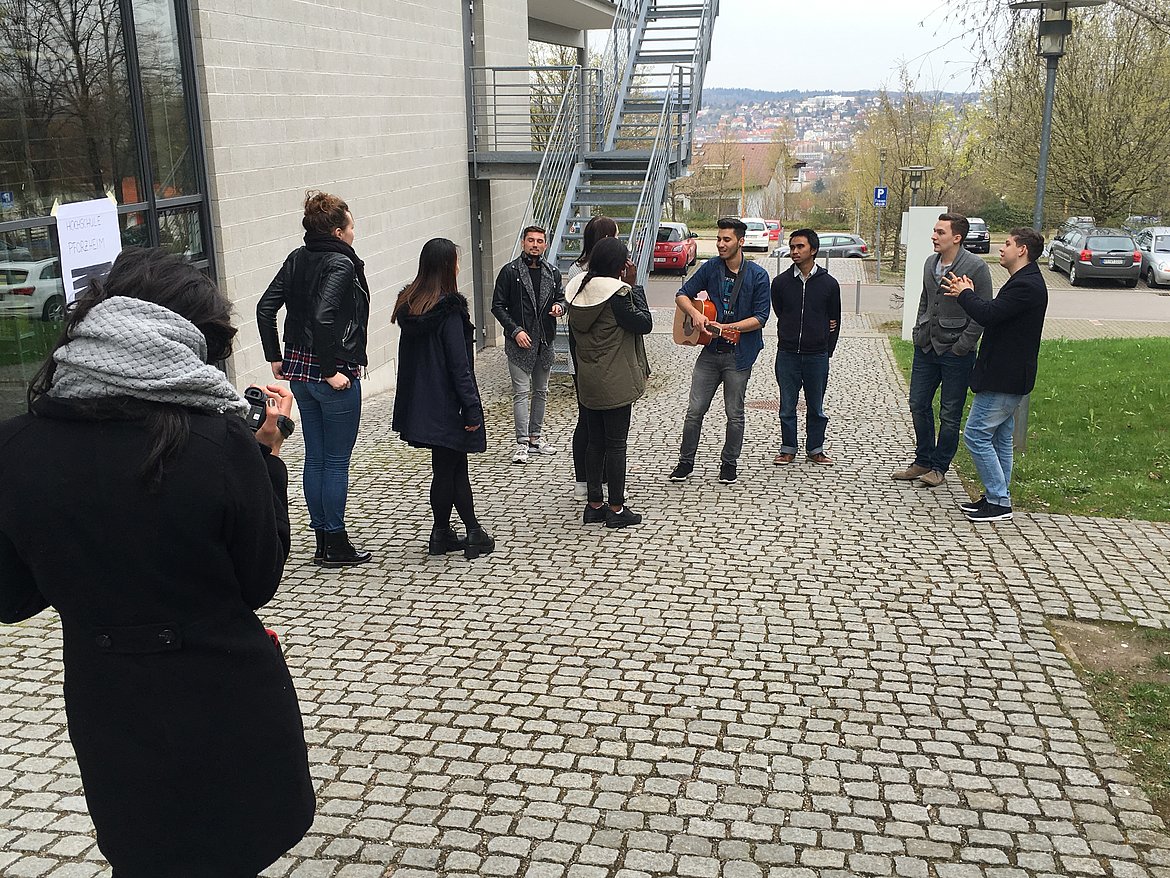
Accordingly, the presentation training has been developed from a beginner’s course into a modular skills training programme. Based on a placement test, participants are divided into groups that are as homogeneous as possible, within which they can, together with their tutor, familiarise themselves with the requirements for presentations at the university and further develop their presentation skills. The ability to reflect and the introduction of a culture of feedback have emerged as key aspects, to which great importance is attached in the presentation training. Whilst the communication training remains a traditional behaviour-oriented programme, in which students can experience and shape communication processes through individual exercises and group games, the newly designed teamwork training takes a different approach. Students are first introduced to an idea for a basic approach to a group task. The group is then required to solve a task together within a set time, with the tutor taking on the role of a learning facilitator. His role is to observe the group process and then reflect with the group on which strategies were successful and which behaviours were less so. Specifically, participants in the teamwork training are tasked with jointly producing a music video (see Fig. 4) that must meet certain requirements. At the end of the day, the videos are screened during a joint session with all groups, and the team with the best video receives a prize. This approach creates a stimulating learning environment for the students, in which they can tackle the set task in a practical and experiential way. The use of modern media and the end result in the form of a video represent elements from the everyday lives of young people that are familiar to them, and to which each individual contributes their own prior knowledge.
Tutor training
Another advantage of the SIC programme is the ‘train-the-trainer’ training provided for tutors. To this end, around 40 tutors must be selected each semester. The primary target group for recruiting tutors is students in their sixth semester; however, many of them use this semester to study abroad. When the selection process for the SIC programme takes place, the target group is also in the middle of their work placement semester, which makes the selection process considerably more difficult. For this reason, students in their third or fourth semesters are also employed as tutors, at least for the first part (communication training and teamwork training) of the SIC programme. For the second part (presentation training), the tutors themselves should already have gained extensive experience with presentations at university and during their work placements. Where possible, tutors are selected on the basis of personal interviews and are offered a contract as student assistants. In a comprehensive train-the-trainer seminar led by experienced trainers, the tutors not only familiarise themselves with the content of the individual training sessions but also gain an understanding of the methodological expertise required of a trainer. Following the delivery of the training sessions, a tutor supervision session takes place each semester. This gives the tutors the opportunity to share their experiences as trainers, pick up further teaching tips and provide feedback on the content and organisation of the SIC programme. A new format for tutor supervision was trialled in the summer term of 2016. In a ‘World Café’ setting, the tutors work in small groups on various questions (e.g. What expectations or fears did I have before the training? Which image best reflects your role as a tutor? (Shepherd, conductor, guide, juggler, etc.) The tutors greatly appreciate this informal format for discussion and see positive learning outcomes for themselves. Following these experiences, many are keen to sign up for another round as tutors in the next semester. In addition to their pay, the tutors receive a certificate, which is often noted in job applications and has, in the past, opened the door to a new job for many. Over the past 10 years, around 60 new tutors have benefited from this additional qualification every year.
Looking to the future
As the programme is further developed, accommodating diversity – that is, students with different learning and educational backgrounds – will present a key challenge. Whilst there are many ways in which SIC components could be tailored to individual needs, the programme as a whole must remain systematic and – given the large number of participants – manageable. The success of the SIC programme depends not only on the quality of the programme itself, but also on its successful integration with the subject-specific degree course (see Fig. 2 – the common thread). Important components such as mentoring, supervision of work placement students, assessment of presentation skills and qualified feedback fall, in particular, under the responsibility of the degree programmes. Many younger colleagues did not experience the programme’s inception first-hand, and there is a risk that information about its objectives and procedures is not always passed on. A further development is being implemented in the SIC programme’s anniversary year. For the first time, an English-language Bachelor’s degree programme is taking part in the SIC programme. Accordingly, the SIC offerings will in future also be developed in an English-language version and adapted to the specific requirements of the new degree programme ‘Digital Enterprise Management’.
Brigitte Burkart
heads the SIC programme at the Faculty of Economics and Law.
Dr Günther Bergmann
played a key role in designing the SIC programme and led it for six semesters. Until the end of the summer semester 2016, he was Professor of Human Resource Management and a member of the university’s Human Resources Competence Centre
As a student starting in the 3rd semester or higher (lateral entrants), you will only take part in the presentation training.
This two-day training course takes place in on-site at the university on two consecutive days before the start of the summer semester start.
Please register by email to sik(at)hs-pforzheim(dot)de.
If you have already taken part in a comparable presentation training, please contact Ms. Burkart directly to clarify whether there are any credit transfer options.

“I moved to Pforzheim over a year ago with a queasy feeling. A new phase of life, you don't know anyone, you don't know exactly whether you'll make a connection - a fear that was totally unfounded. Through the SIC, I got to know a lot of new people who I'm still friends with, and I had a good and relaxed start to my studies. My SIC gave me lots of tips for my foundation course that I probably wouldn't have learnt without it.”
Vivian Speidel, Controlling degree program
"Even today, I still remember the SIC introductory events when I started my degree program. At the time, I thought these were a good way of making it easier for new students to get started thanks to the small groups and the tutor's anti-authoritarian approach. On the other hand, the social skills of the new students are trained right from the start, which is really important, as I noticed during my practical semester, for example."
Patrick Rettenmayr, Controlling degree program

"When I started my studies at Pforzheim University last year in the first semester and was supposed to take part in the SIC program, I had mixed feelings about the days. You had to arrive at the university before the regular start of the semester and the training was scheduled over several days.
In hindsight, however, I am very glad that I took part in the program, as I was immediately integrated into the university. You had the opportunity to get to know many fellow students, mostly even from your own degree program, and were also introduced to the topic of business administration in a very practical way through the case study. You were able to develop your presentation skills and have a lot of fun during the video shoots, for example."
Nele Melissa Schneider, International Business degree program
Why is an English placement test carried out?
Proof of B2 level in English is a prerequisite for participation in English-language courses that are part of your degree program. By taking the English placement test, you can already provide this proof of B2 level.
If you do not take the test or do not reach B2 level in the test, you can provide proof of B2 level later by taking a language course followed by an exam. However, you can only take the online placement test once.
If you already have a B2 certificate for which recognition is possible (see below), participation is not necessary. Please contact the employees in the Language Centre if you have any questions about recognition.
All new students take an English placement test as part of the SIC introductory weeks.
Further information can be found under “Information for new students” and “Dates”.
The following degree programs are not participating in the English placement test:
- Digital Business Management
First semester students are automatically registered for the English placement test.
As a new student in your first semester at the Faculty of Business, Economics and Law, you will take an English placement test as part of the SICK program. This placement test takes place in person at the university as part of the SIC introduction weeks. It is not necessary to register in advance. You will receive a group number which will determine the day, time and room. You will receive your group allocation shortly before the start of the SIC program.
For the schedule and room plans, please see ‘Dates’. The test lasts 60 minutes.
You must bring the following documents and equipment with you for the English test:
- identity card or student ID
- your own headphones (with cable / no Bluetooth).
- First-semester students of the degree program Digital Business Management.
- Students who already have a B2 certificate (e.g. Cambridge, TOEFL, IELTS), which can be recognised accordingly. You should have your certificate recognised as soon as possible. Please contact the Language Centre with any questions regarding possible recognition - the SIC team is not the point of contact here.
- Students who have already taken this test and have not passed it. Participation is only possible once.
- Students from a higher semester of the Faculty of Business, Economics and Law who have not yet reached B2 level in English.
- Students who have changed their degree program within the Faculty of Business, Economics and Law.
The math orientation test is offered as an online test. You can take this test from home. Participation is strongly recommended. The test serves as your own orientation and to assess your previous knowledge of mathematics. The test result makes it easier for you to further develop your previous knowledge in a targeted manner. The results will not be passed on in any form. Further information: see E-Campus
We offer you the opportunity to refresh your knowledge of mathematics in a free course. In this preliminary course, you will review the school material up to A-level.
| Course | Date | Additional information |
|---|---|---|
| Pre-course I | from August 24, 2026 to August 28, 2026 | Course registration (from July 6, 2026) and further information on our Ilias platform. Both courses are held in German! |
| Pre-course II | from August 31, 2026 to September 4, 2026 |
You can find the SIC team’s contact details at the bottom of the SIC website. We are available before and during the SIC weeks.
As important information for your degree is provided during the first few days, you should attend every day. If this is not possible, you will need to catch up on the sessions in the following semester (during the next SIC phase). Binding registration is required and must be carried out proactively by the student.
You have two options:
1. Retake the English placement test in the next semester – you will need to register for this by emailing SIK.
2. Enrol on a B2 course with a final exam – you will need to register for this with the Language Centre.
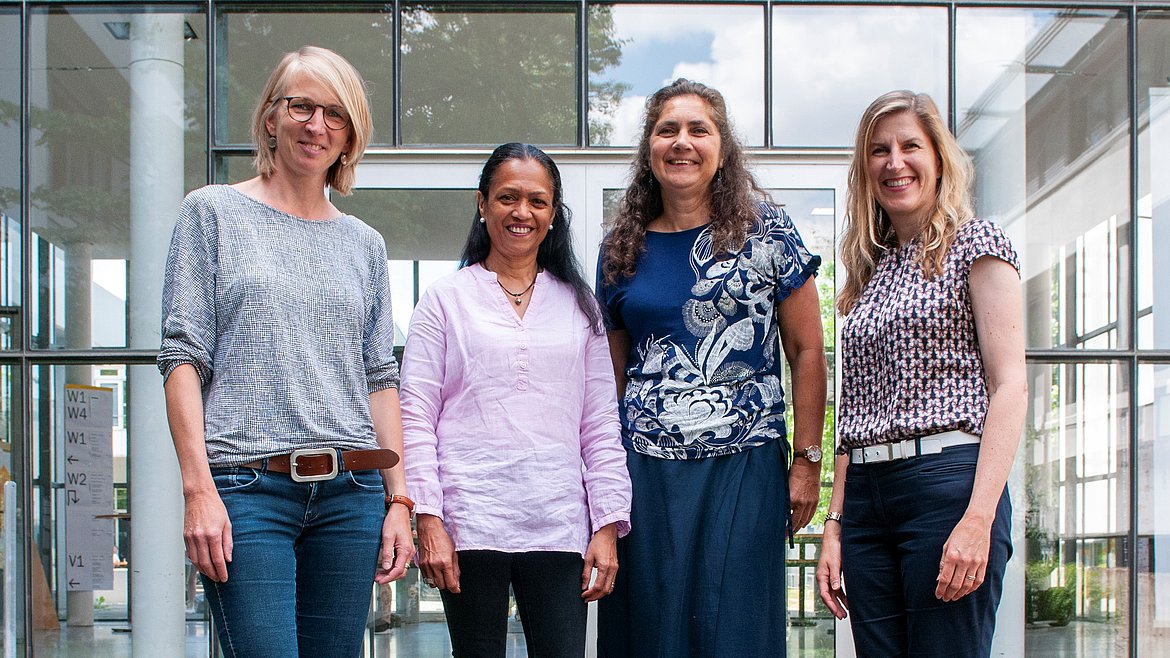
SIC Program Management
Brigitte Burkart
Dipl.-Psych.
Phone 07231 286290
E-Mail brigitte.burkart(at)hs-pforzheim(dot)de
Room W2.1.15
SIC Program Assistance
Michaela Lohrer
Dipl.-Ing. (FH), Dipl.-Wirtsch.-Ing. (FH)
Phone 07231 286172
E-Mail sik(at)hs-pforzheim(dot)de
Room W2.1.15
Lecturer CCC Seminar
Dina von Garlen
Phone 07231 286388
E-Mail dina.vongarlen(at)hs-pforzheim(dot)de
Room W2.3.28
Consultation hour: Please make an appointment by e-mail.
Lecturer CCC Seminar
Susanne Glas
Study Abroad Advisor (Outgoing)
Phone 07231 286092
E-Mail businessout(at)hs-pforzheim(dot)de
Room W2.3.19