Laboratories and Facilities
In addition to the main work and computer rooms, the Business Administration / Media Management and Digital Media program features excellent laboratory facilities to support teaching and students’ independent work. The lab infrastructure consists of four units, which are briefly described below. The labs are under the supervision of two lab engineers, who assist students with their independent projects and maintain the equipment.
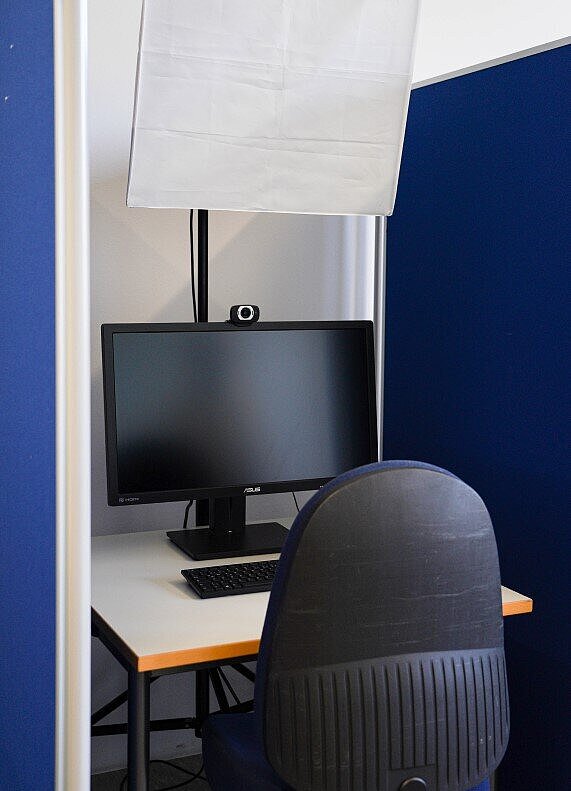
The Consumer Research Lab offers students—particularly those in the fields of market research and consumer psychology, media management and advertising psychology, and marketing intelligence—the opportunity to use instrumental research methods for their projects and theses. The lab’s focus is on investigating consumer experiences and behavior, as well as the impact of advertising materials.

The Consumer Research Lab's repertoire includes the following psychophysiological and behavioral measurement methods:
Eye Tracking
Tobii Pro Lab, the eye-tracking software from leading provider Tobii Pro, in combination with the Tobii Pro Fusion eye tracker, enables the tracking and recording of gaze behavior using infrared technology. Eye tracking makes it possible to identify the information perceived by consumers, thereby providing insights into their behavior and decision-making processes.
Furthermore, eye-tracking provides valuable insights into visual attention. In addition to advertising effectiveness tests for ads and usability tests for websites and software, the system can be used to conduct tests on brochures, packaging, and design. Dynamic content, such as commercials, can also be analyzed using the system.


Automatic Facial Action Coding
The FaceReader 8 software from Noldus allows users to draw conclusions about consumers’ emotional states based on their facial expressions. Both live and pre-recorded video footage, as well as still images of consumers, can be analyzed, enabling the software to provide real-time data on the emotions expressed through facial expressions.


Reaction Time Measurement
The E-Prime 3 software enables the presentation of stimuli with millisecond precision and the measurement of consumer responses. Using proven research paradigms such as the Implicit Association Test, unconscious attitudes and preferences can be examined.
In addition, the Consumer Research Lab offers the option of combining the methods mentioned above with in-depth interviews or focus groups and recording them using video and audio.
Reaction Time Measurement
The E-Prime 3 software enables the presentation of stimuli with millisecond precision and the measurement of consumer responses. Using proven research paradigms such as the Implicit Association Test, unconscious attitudes and preferences can be examined.
In addition, the Consumer Research Lab offers the option of combining the methods mentioned above with in-depth interviews or focus groups and recording them using video and audio.
You can find information about the offerings here.
Outside of class hours, the lab is available to students 24/7—including on weekends—via access with a key card.

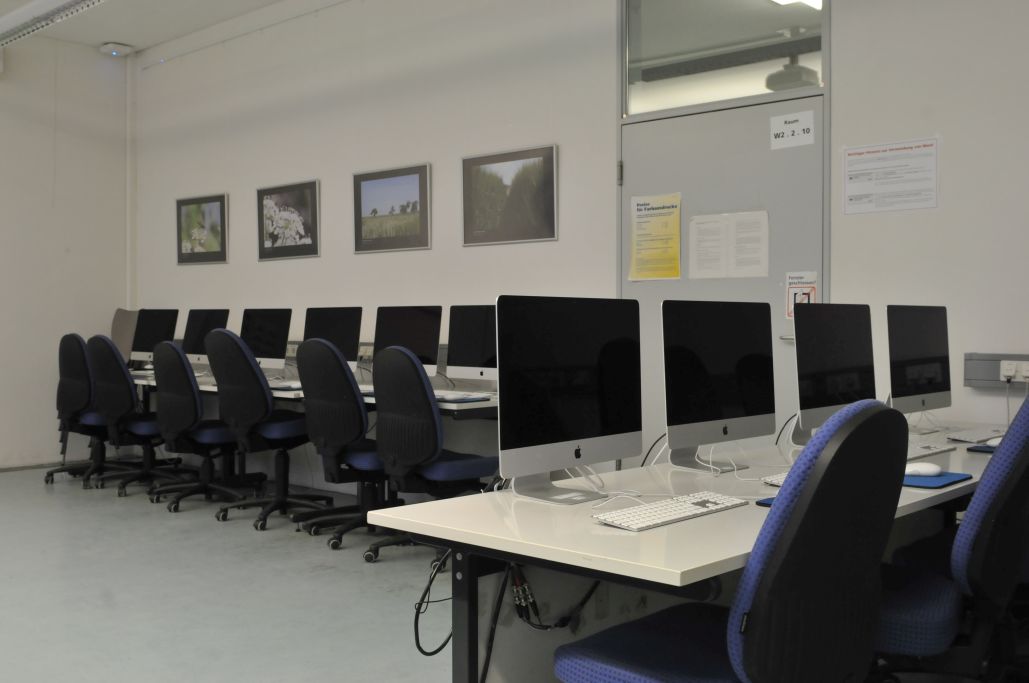

The Marketing Lab has ten PC-based workstations and is primarily used for courses such as data analysis and online market research. Here, students can learn and practice using statistical software (SPSS) and online market research tools (Rogator). This room is accessible around the clock via a key card system. In some cases, it is also possible to use the software from home. You can find more information, particularly about SPSS, here.
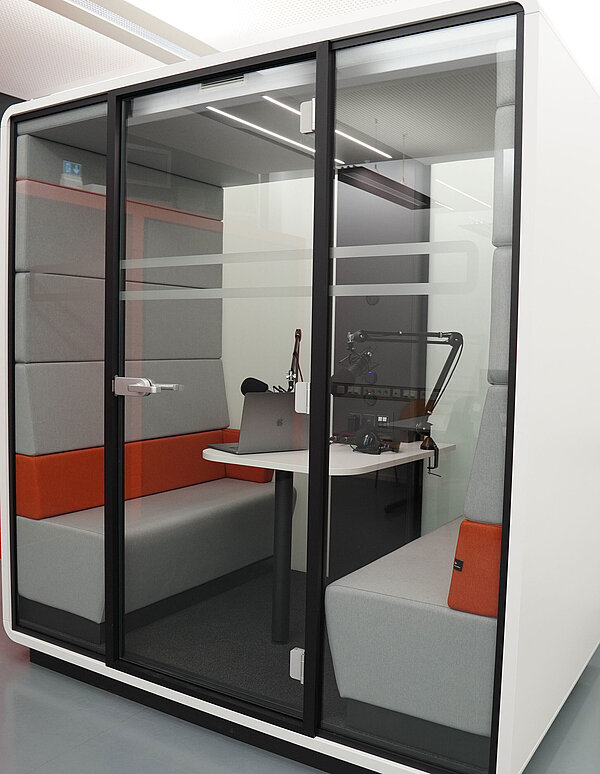
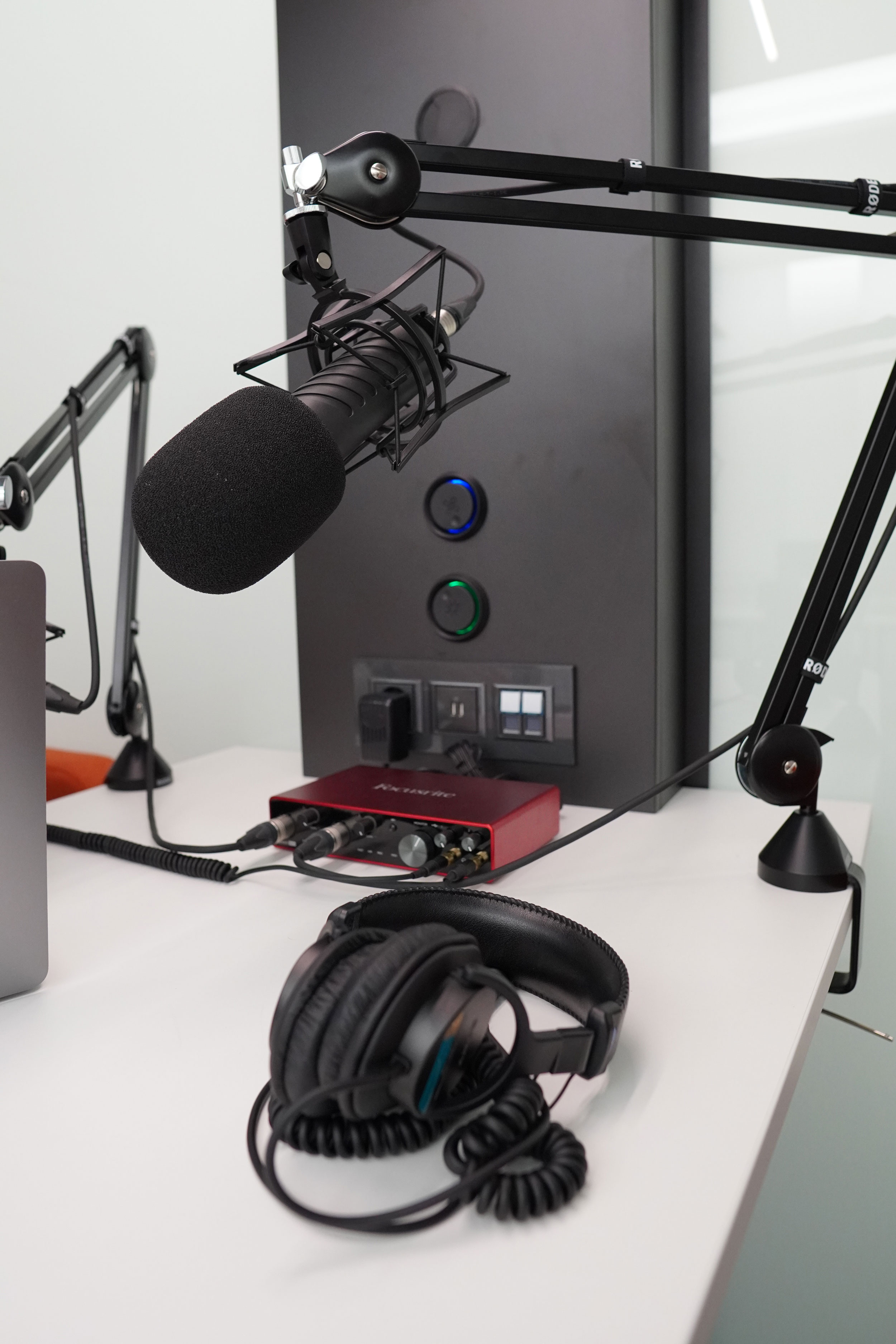
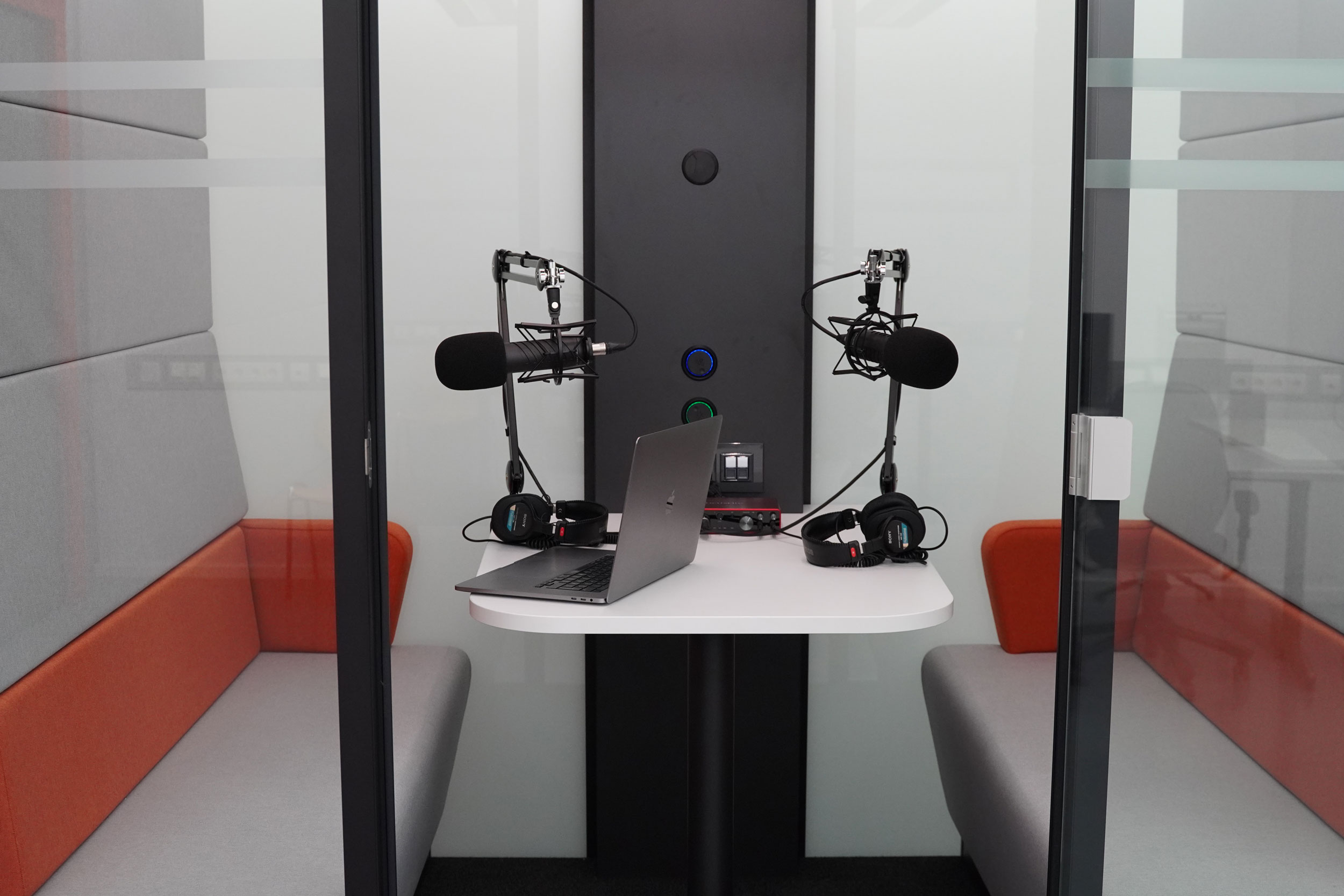
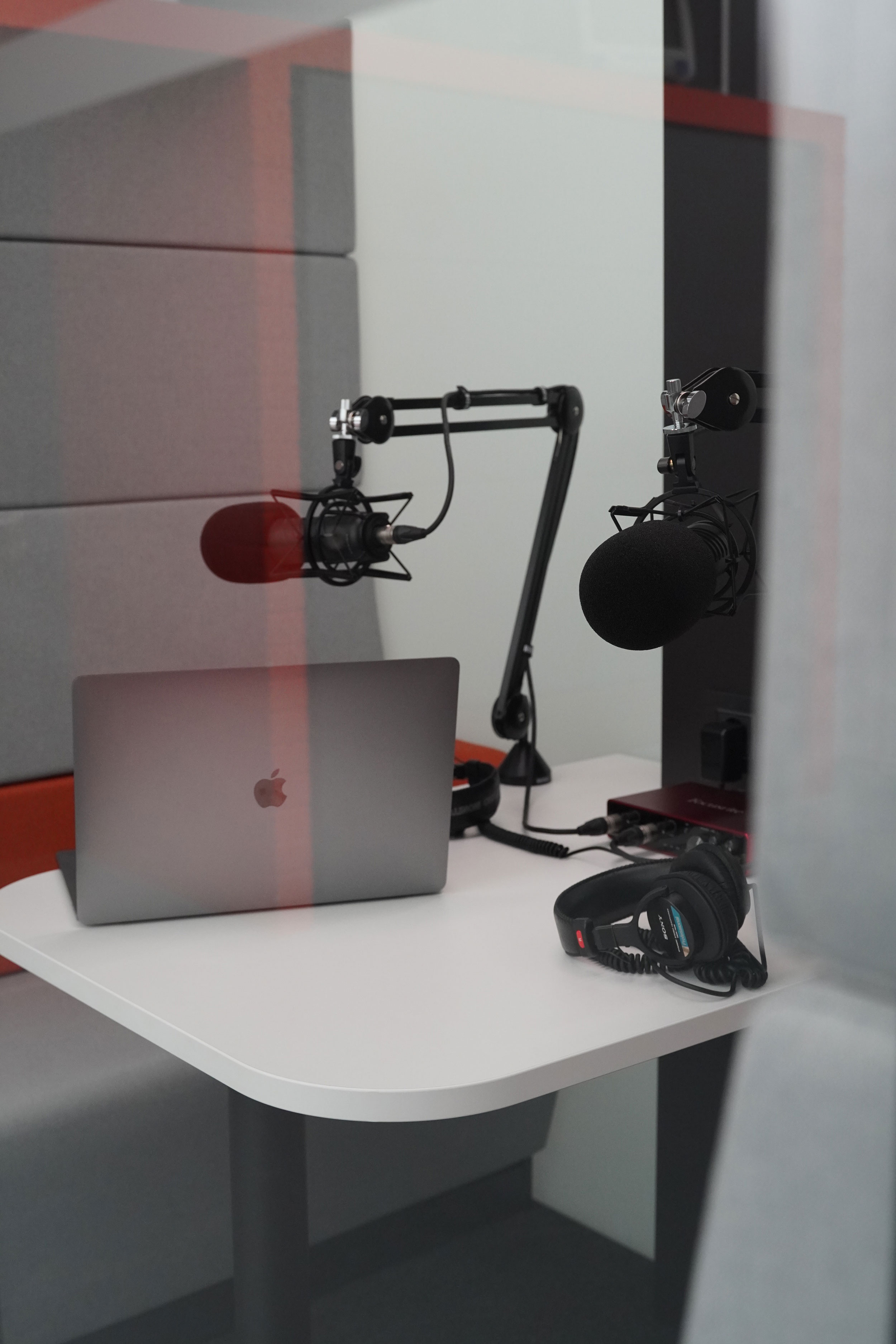
The Podcast Lab features a dual-podcast booth where you can professionally record your own podcasts. The Podcast Lab is used, among other things, in media and communication courses as well as in specific elective courses focusing on podcasting (concept development). With guidance, students can learn how to use the podcast equipment here and gain their first hands-on experience with audio production.